10 Best Cloud-Based Payroll Software in India
Table of contents
Still managing Labour Code compliance in spreadsheets? There's a better way.
Audit salary structures against the new 50% wage rule
Stay aligned with changing multi-state labour regulations
Automate payroll, PF, gratuity, and statutory compliance

Key Takeaways
- Cloud payroll software now powers most enterprise payroll operations in India.
- Enterprises need payroll platforms that automate PF, ESI, TDS, PT, and LWF compliance.
- AI matters most when payroll errors are detected before salary disbursement.
- Unified HCM platforms reduce payroll and compliance gaps across teams and entities.
- Top Ten enterprise payroll platforms assessed on compliance depth, AI maturity, pricing, and scalability.
- ZingHR stands out for unified HCM, agentic intelligence, and enterprise-scale compliance visibility.
Your payroll system now affects far more than salary processing. CFOs want tighter payroll costs. CHROs need compliance visibility across multiple states. CIOs want fewer disconnected systems and lower integration overhead.
Cloud payroll software has become the preferred model for large enterprises because manual payroll operations no longer scale cleanly. Multi-state compliance, changing tax rules, and gig workforce regulations have increased payroll complexity across industries. Platforms that automate PF, ESI, TDS, professional tax, and Labour Welfare Fund calculations reduce operational risk significantly.
The challenge is that very few payroll platforms are built for enterprise-scale operations. A system designed for 200 employees may struggle once the workforce size, entities, locations, and compliance requirements increase.
Here’s a list of ten cloud-based payroll software platforms based on compliance automation, AI capabilities, HCM integration, global scalability, and long-term enterprise value.
How We Evaluated: The Enterprise Payroll Framework
Statutory compliance and HCM integration shaped our evaluation framework. We assessed platforms across five enterprise-focused criteria:
- Compliance automation: PF, ESI, TDS, PT, LWF, Form 16, and filing automation across states.
- AI capabilities: Payroll anomaly detection, predictive alerts, and automated compliance adjustments.
- HCM integration: Payroll connected with attendance, leave, benefits, ERP, and workforce analytics.
- Multi-country support: Global payroll coverage, local compliance, and multi-currency capabilities.
- Total cost of ownership: Enterprise pricing, setup fees, integration costs, and long-term scalability.
The strongest platforms reduced manual payroll effort while improving compliance accuracy and enterprise visibility.
The 10 Best Cloud-Based Payroll Software in India for Enterprises (2026)
Below is the full list of cloud-based payroll software, scored against the five enterprise criteria above. Detailed reviews follow the table, starting with the platform's strongest at unified HCM and working down to specialists.
Overview of 10 enterprise cloud-based payroll platforms
Pricing reflects 2025–2026 published rates and vendor interviews. Enterprise tiers are custom-negotiated; expect 20–30% volume discounts for 1,000+ employees. Setup fees (₹2–10L) and API integration charges are additional.
1. ZingHR: Agentic Intelligence HCM for Enterprise Payroll

ZingHR is an agentic intelligence HCM platform built for Boards, CXOs, and enterprise HR leaders. The platform unifies payroll, compliance, attendance, workforce analytics, and employee lifecycle operations inside a single command centre.
Enterprises with 5,000+ employees, especially across BFSI, Pharma, Manufacturing, and QSR, benefit from real-time payroll intelligence that identifies anomalies before salary disbursement. Auto-adjusting PF, TDS, and statutory compliance workflows help enterprises manage regulatory changes without manual intervention.
By combining payroll operations with AI-powered workforce intelligence, ZingHR helps enterprises move beyond transactional HR management toward faster decision-making, stronger compliance visibility, and enterprise-wide workforce control.
Pros of ZingHR
- Agentic intelligence connects payroll, compliance, and HCM workflows from a single platform.
- Real-time workforce intelligence supports board-level and CXO decision-making.
- Native multi-module architecture reduces dependency on third-party integrations and middleware.
- Compliance automation supports PF, ESI, TDS, professional tax, and Labour Welfare Fund calculations across states.
- Unified data visibility improves payroll accuracy, workforce reporting, and operational control at enterprise scale.
Cons of ZingHR
- Enterprise workflow customisation may require additional time and investment for complex organisational setups.
- Regulated industries with intricate compliance structures may experience extended onboarding timelines.
- Large, multi-location organisations may need a phased rollout approach across entities and geographies.
2. GreytHR: India's Compliance Workhorse

GreytHR supports payroll and compliance operations for 20,000+ businesses across India. The platform focuses heavily on statutory compliance workflows covering PF, ESI, TDS, and professional tax.
Enterprises managing large India-based workforces benefit from automated filing processes and reduced manual payroll effort. The platform fits organisations looking for India-focused payroll operations with stable compliance management..
Pros of GreytHR
- Deepest India compliance automation on this list, proven across 20,000 or more customers.
- Employee self-service portals reduce routine HR queries by roughly 50%.
- Competitive per-employee pricing relative to full-suite HCM platforms.
Cons of GreytHR
- Global payroll depth is limited; multi-country teams will need a complementary solution.
- AI capabilities work at the rules-based level, with room to grow toward agentic anomaly detection.
- HCM module coverage is narrower than dedicated full-suite platforms.
3. Darwinbox: Full HCM Suite for Large Enterprises

Darwinbox delivers one of the most complete HCM suites among India-origin platforms. Large enterprises migrating from legacy systems have reported 70% reductions in payroll processing time.
The AI analytics layer proves genuinely useful for workforce planning tied to payroll cost modelling. Add it to your shortlist if you want end-to-end HCM with solid international reach. Plan for a steeper learning curve during rollout.
Pros of Darwinbox
- End-to-end HCM with payroll deeply integrated across the full employee lifecycle.
- Strong AI analytics for workforce cost planning and headcount modelling.
- Growing global footprint; well-suited for enterprises in the 1,000–10,000 employee range.
Cons of Darwinbox
- Steeper learning curve; plan for longer onboarding and active change management.
- Setup costs start at ₹5L and climb with customisation.
- Agentic intelligence is maturing and moving toward self-healing payroll capability.
4. Keka: Mobile-First Payroll for Scaling Enterprises
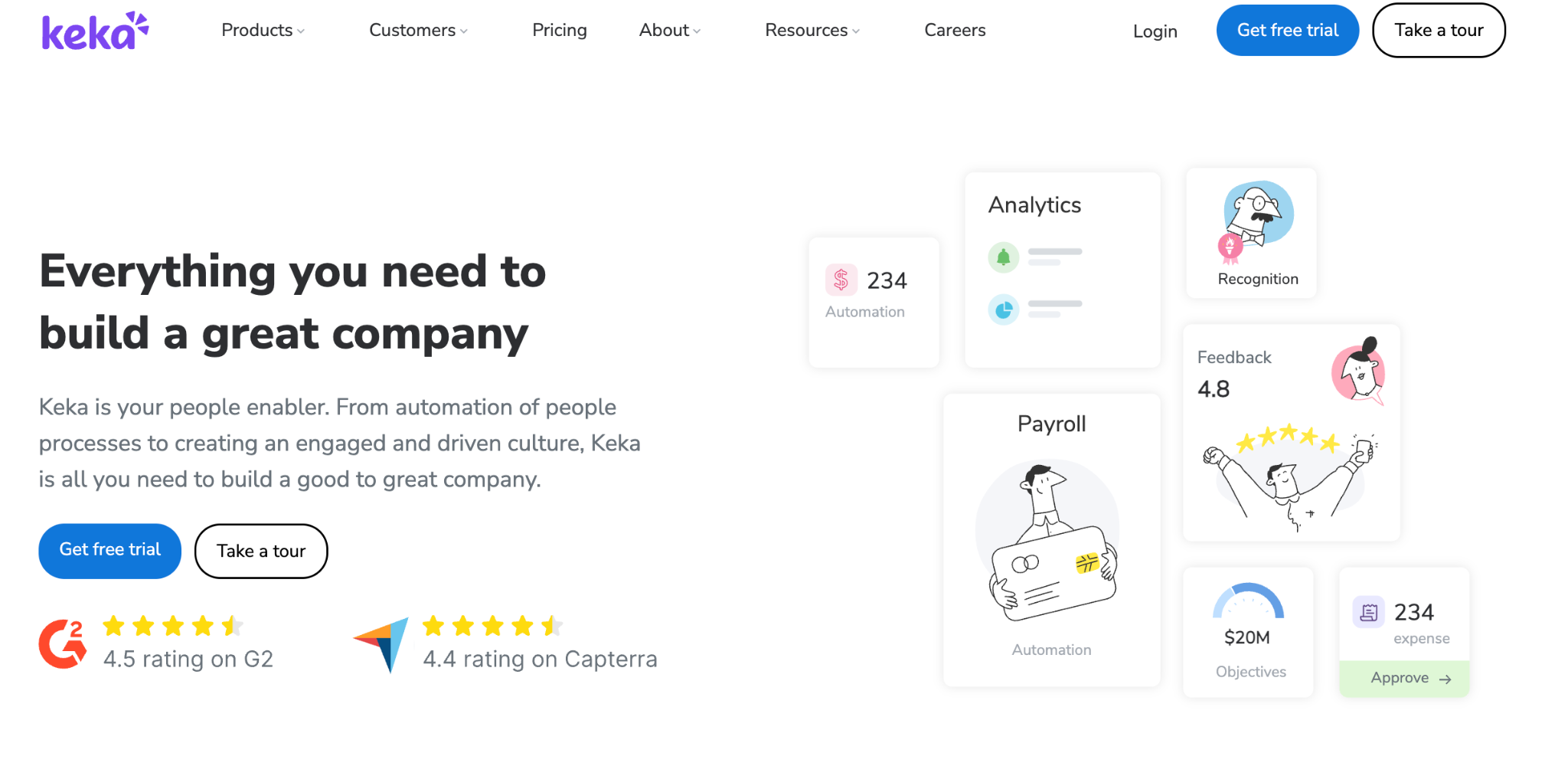
Keka has built a loyal base of 6,500+ customers by being mobile-first and genuinely approachable. The UI is cleaner than most enterprise payroll software cloud based tools, and adoption rates reflect that polish.
If your team is crossing the 1,000-employee threshold and wants reliable India-centric payroll with lean implementation overhead, Keka hits a practical sweet spot.
Pros of Keka
- End-to-end HCM with payroll deeply integrated across the full employee lifecycle.
- Strong AI analytics for workforce cost planning and headcount modelling.
- Growing global footprint; well-suited for enterprises in the 1,000–10,000 employee range.
Cons of Keka
- Steeper learning curve; plan for longer onboarding and active change management.
- Setup costs start at ₹5L and climb with customisation.
- Agentic intelligence is maturing and moving toward self-healing payroll capability.
5. uKnowva HRMS: AI Efficiency at a Competitive Price Point
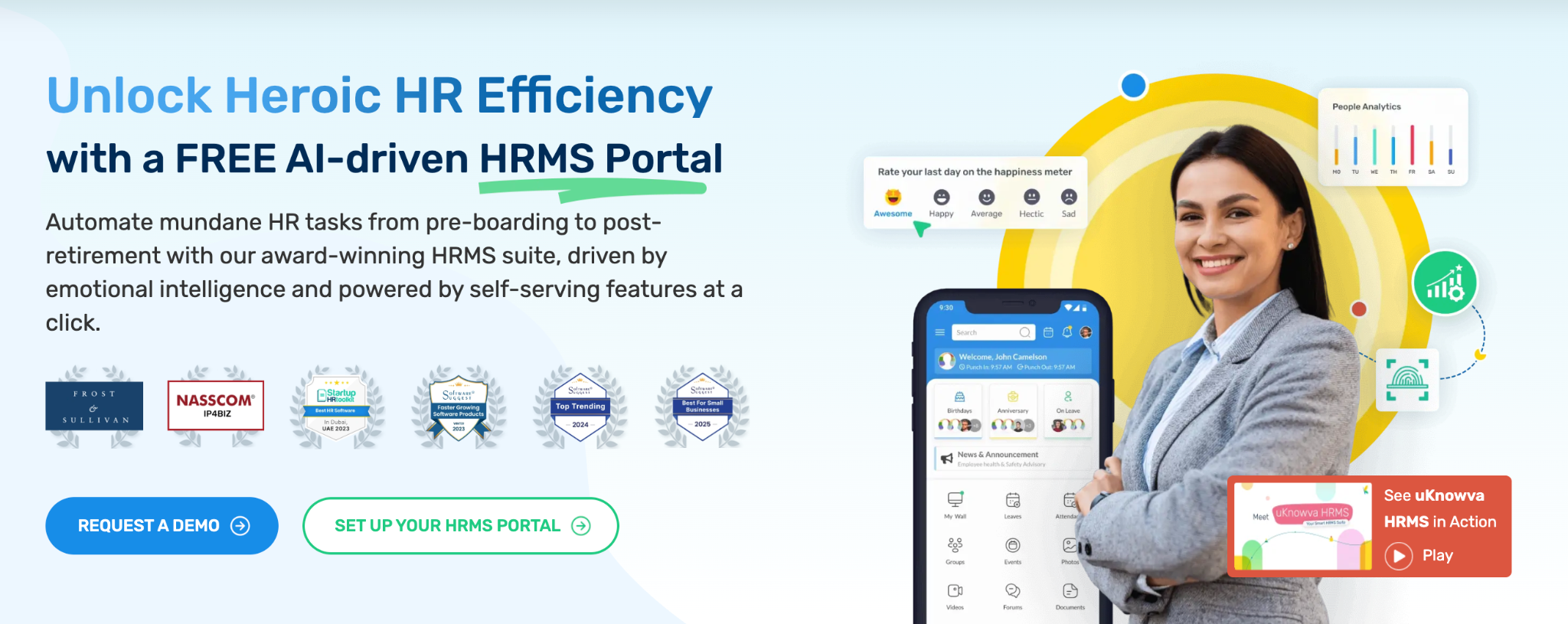
uKnowva targets the 500–5,000 employee range with an AI-driven payroll engine that cuts manual processing hours by 80% in documented deployments.
The platform offers 50+ HR modules, giving it breadth unusual at its price point. Cost-conscious enterprises wanting genuine automation that goes beyond digitised spreadsheets should give uKnowva serious evaluation.
Pros of uKnowva HRMS
- AI-driven payroll with measurable efficiency gains documented across deployments.
- 50 or more modules spanning recruitment to exit at ₹40–90 per employee — accessible for mid-market enterprises moving upstream.
- Scalable architecture supports growth without a platform migration.
Cons of uKnowva HRMS
- ERP and accounting integration setup takes time; plan for a longer implementation window.
- Enterprise support responsiveness could be stronger for organisations with tight SLAs.
- Global payroll capabilities are less extensive than those offered by HR Blizz or Paylocity.
6. RazorpayX Payroll: Fintech-Native Instant Disbursements

RazorpayX comes from a payments company, and the speed shows. Same-day salary credits and instant contractor payouts via UPI are the headline features. Automated TDS deposits round out a low-friction disbursement toolkit.
The transaction-based pricing model appeals to finance teams that prefer variable cost structures over fixed per-employee commitments. Fintech and e-commerce verticals with high contractor ratios find the most natural fit.
Pros of RazorpayX Payroll
- Instant salary disbursements with UPI integration and transaction-based pricing that scales predictably.
- Strong statutory compliance for TDS and PF filings.
- Purpose-built for organisations with high contractor-to-employee ratios.
Cons of RazorpayX Payroll
- HCM depth is thin; workforce analytics and agentic intelligence sit outside its scope.
- Multi-country payroll support is minimal.
- Enterprises needing board-level dashboards or integrated talent management will outgrow it quickly; best deployed as a disbursement layer alongside a full HCM suite.
7. Zoho Payroll: Best for Zoho Ecosystem Enterprises
If your organisation already runs Zoho People and Zoho Books, adding Zoho Payroll creates a tightly connected finance-and-HR stack. Data flows natively between modules.
Attendance from Zoho People feeds directly into payroll calculations, and salary journals post automatically to Zoho Books. That's a genuine advantage for enterprises standardised on the Zoho ecosystem.
Pros of Zoho Payroll
- Native integration across the full Zoho suite at ₹40–80 per employee.
- Solid India compliance for PF, ESI, TDS, and professional tax built in.
- Employee self-service portal reduces routine payroll queries.
Cons of Zoho Payroll
- India-only payroll focus; international gross-to-net calculations require a separate solution.
- Integration advantage depends on Zoho ecosystem adoption; standalone value is lower.
- Agentic-level intelligence is still on the roadmap; current AI handles routine tasks only.
- Complex multi-entity structures or headcounts above 5,000 may stretch the platform.
8. HR Blizz (Mercans): API-First Global Payroll Engine
HR Blizz earns its spot through API-first architecture built for cross-border payroll execution. Mercans launched the G2N Nova engine in 2025, the world's first API-first global payroll architecture.
It covers 100+ countries with real-time gross-to-net calculations and local statutory compliance. Indian enterprises expanding into the Middle East or Southeast Asia can run INR and foreign currency disbursements from one engine.
Pros of HR Blizz
- Deepest multi-country coverage on this list: 100 or more countries with localised compliance.
- API-first architecture integrates cleanly with existing ERP and HCM stacks.
- GDPR and cross-border data privacy handled natively.
Cons of HR Blizz
- Overkill for India-only operations; adds complexity without proportional benefit.
- Enterprise pricing is opaque; expect lengthy procurement cycles.
- India-specific state-level compliance is less granular than dedicated India platforms.
- Implementation requires dedicated API integration resources on your side.
9. Paylocity: Employee Engagement Meets Global Payroll

Paylocity combines workforce engagement tools like pulse surveys and community feeds with global payroll processing. In Q1 2026, the platform added agentic AI for workforce analytics, moving it past basic automation.
Indian enterprises with distributed remote teams, especially in IT/ITes, find value in the unified engagement-plus-payroll model. Documented outcomes include 40% faster global payroll cycles for Indian enterprises managing remote international teams.
Pros of Paylocity
- Engagement and payroll in one platform, an unusual combination at enterprise scale.
- Agentic AI for workforce analytics launched in 2026.
- Strong multi-country payroll with proven cycle-time reductions.
Cons of Paylocity
- Premium pricing at ₹100 or more per employee makes it the most expensive option on this list.
- India-specific statutory depth trails dedicated to India platforms.
- Onboarding timelines are longer than those of mid-market alternatives.
- India-heavy operations tend to find stronger ROI with dedicated India platforms.
10. Zimyo: Modular Payroll for Growing Enterprises
Zimyo sits in the sweet spot for mid-market enterprises crossing the 500-employee mark, offering 50+ HR modules at a price point that full-suite HCM platforms …
Zimyo sits in the sweet spot for mid-market enterprises crossing the 500-employee mark, offering 50+ HR modules at a price point that full-suite HCM platforms rarely match.
If you are adding entities, expanding across Indian states, and need a platform that grows with you without a costly migration down the line, Zimyo is worth a serious look.
Pros of Zimyo
- 50 or more HR modules starting at ₹50 per employee; modular architecture lets you add capabilities as complexity grows.
- Solid India compliance for PF, ESI, and TDS filing built in.
- Good fit for organisations crossing the 500-employee mark.
Cons of Zimyo
- Enterprise support SLAs need improvement for organisations requiring sub-4-hour response times.
- Multi-country payroll is limited.
- Predictive and agentic features are still maturing; current AI handles routine tasks only.
- Enterprises above 3,000 employees may need to re-evaluate as scale demands grow.
How ZingHR Approaches Cloud-Based Payroll for Enterprises
Agentic anomaly detection and a unified HCM command centre define ZingHR's approach to enterprise payroll. The platform treats payroll as a strategic data layer feeding board-level decisions.
Here's what that looks like at enterprise scale.
1. Agentic intelligence is built into every payroll run
ZingHR's payroll engine flags errors during the run itself, before disbursement. The system catches every payroll error before you do, overtime spikes, TDS miscalculations, and multi-state professional tax discrepancies.
It detects, explains, and self-corrects automatically, so your team never has to chase it down manually. Automation executes what you configured. Agentic intelligence catches what you missed.
2. Unified HCM from a single command centre
Attendance, workforce analytics, and payroll share one data layer, so every number your CHRO, CFO, and board sees comes from the same source. Headcount-to-cost ratios update in real time.
Payroll cost trending no longer requires a three-export reconciliation. A single-platform HR ground zero system removes middleware and the overhead that comes with every vendor update.
3. Built for Indian complexity at a global scale
ZingHR handles every Indian statutory obligation natively, including PF, ESI, state-specific professional tax, and LWF. Built-in audit trails and auto-filing support regulated industries such as BFSI, Pharma and Healthcare.
Enterprise HCM suites assembled from five or more acquired products carry real operational costs: multiple data models, sync delays, and middleware dependencies across teams with separate roadmaps. ZingHR takes a different approach. All 35+ modules were built in-house by a single team, on one codebase and one database. There are no bolt-ons, no middleware, and no data contradictions.
As operations expand beyond India, multi-country capabilities scale within the same system across India, MEA, and Southeast Asia. Businesses avoid platform migration entirely at the point of international expansion.
Choosing the Right Cloud-Based Payroll Software for Your Enterprise
Your current headcount distribution and 18-month growth trajectory should drive this decision. Here's how to collapse a 10-platform list into a three-vendor shortlist:
- India-deep, compliance-first: GreytHR and Zoho Payroll (if you're already in the Zoho ecosystem) deliver the strongest India-specific statutory automation at competitive price points.
- Full HCM unification with agentic intelligence: ZingHR and Darwinbox give you payroll embedded in a broader HCM platform. ZingHR's agentic intelligence layer and single command centre architecture stand out for enterprises prioritising board-level workforce intelligence.
- Global-first, multi-country operations: HR Blizz and Paylocity serve enterprises where 20%+ of headcount sits outside India. HR Blizz leads on country coverage; Paylocity adds engagement tools.
- Scaling mid-market: Keka and Zimyo provide strong value for enterprises crossing 1,000 employees. uKnowva rounds out this category with a comparable modular approach.
- Disbursement speed: RazorpayX Payroll works best as a payments layer alongside a broader HCM platform, especially for gig-heavy or contractor-intensive operations.
Regardless of which platform you shortlist, negotiate hard on the total cost of ownership, push for bundled implementation and capped API fees, and demand a live demo with your actual payroll data instead of a canned walkthrough.
With the Indian payroll software market growing at 15 to 20% CAGR through 2026, vendor capabilities shift fast enough that a phased pilot with 10% of your workforce before full rollout is not optional, it is necessary.
ZingHR is a unified HCM platform built for enterprises that cannot afford to separate payroll accuracy from workforce strategy.
Agentic intelligence, native statutory compliance across every Indian state, and board-level dashboards that refresh in real time, all from a single command centre.
Book a 30-minute walkthrough with a ZingHR specialist to see how your enterprise can consolidate payroll, compliance, and workforce intelligence in one platform.
Frequently asked questions (FAQs)
Cloud payroll shifts salary processing and statutory compliance to a hosted platform that pushes updates automatically. For enterprises with 1,000 or more employees, it reduces processing errors by up to 90% and removes the manual tracking that causes filing gaps.
Standard automation executes rules. Agentic intelligence detects anomalies mid-run, self-corrects errors before disbursement, and auto-adjusts calculations when regulations change, without manual intervention.
Onboarding and setup fees typically add ₹2–10L, and add-ons inflate the total 15–30% above the sticker price. Volume discounts of 20–30% are standard for 1,000 or more employee contracts, negotiating these upfront.
Yes, but capabilities vary. ZingHR and GreytHR handle multi-state Indian compliance natively. For workforces with more than 20% headcount outside India, prioritise platforms with a proven global gross-to-net engine like HR Blizz or Paylocity.
Full implementation takes 8 to 20 weeks depending on integration complexity. A phased rollout starting with 10% of headcount is the recommended approach; enterprises using this method report up to 70% reductions in payroll processing time post-implementation.
The Code on Wages 2019 and the Social Security Code 2020 are the two biggest triggers, redefining wage calculations and expanding obligations to gig workers. Platforms with agentic intelligence auto-adjust rules as regulations update, reducing manual compliance overhead.
What to do next?
See ZingHR in Action
Join the 1,200+ enterprises that have replaced fragmented HR with one intelligent, future-ready platform. See ZingHR in 30 minutes.
Build the Organization You Want
Great HR drives retention, capability, and culture. ZingHR takes care of the operational layer so your people team owns the strategy.

Elevating Impact.
Defining Destiny
See how ZingHR's AI-powered Hire-to-Retire platform frees your CPO to lead with purpose and deliver the outcomes your Board is watching for


ZingHR is the AI-powered Hire-to-ReHire platform built for one purpose to remove every transactional layer of HR from your organisation, permanently.